Introduction
Harvard University is one of the most famous and respected institutions of higher education in the world. Located in Cambridge, Massachusetts, United States, Harvard is widely recognized for its academic excellence, rich history, distinguished professors, groundbreaking research, and influential graduates. For centuries, the university has played an important role in shaping education, science, politics, economics, literature, medicine, and many other fields.
Harvard represents more than an educational institution. It is a symbol of intellectual achievement, academic ambition, and the pursuit of knowledge. Students from different countries and cultural backgrounds aspire to study there because of its rigorous academic programs, extensive research opportunities, and strong international reputation.
The university has developed from a small colonial college into a major center of global education and research. Its history reflects the transformation of American society, the development of modern universities, and the growing importance of knowledge in human progress.
This article explores Harvard University’s history, academic programs, admission process, campus life, research activities, famous alumni, global influence, challenges, and lasting significance.
1. History and Foundation of Harvard University
Harvard University was established in 1636, making it the oldest institution of higher education in the United States. It was founded during the early colonial period, when European settlers in New England recognized the importance of educating religious leaders and preparing individuals for public service.
Initially, the institution was known as New College. In 1639, it was renamed Harvard College in honor of John Harvard, a minister who left his library and half of his estate to the institution after his death in 1638. His contribution helped support the young college during its early years.
The establishment of Harvard reflected the belief that education was essential for developing knowledgeable leaders and maintaining an educated society. Although its original purpose was closely connected to religious education, the institution gradually expanded its intellectual mission.
During the eighteenth century, Harvard began to develop beyond its original religious foundations. It introduced broader academic subjects and became increasingly influenced by developments in philosophy, science, literature, and political thought.
The American Revolution brought significant changes to education and public life. Harvard’s faculty members and graduates participated in the intellectual and political movements that shaped the new nation. Over time, the college became an important center for training lawyers, ministers, teachers, politicians, and other professionals.
During the nineteenth century, Harvard underwent major reforms. Its curriculum expanded, professional schools developed, and scientific research became increasingly important. Under the leadership of President Charles William Eliot, who served from 1869 to 1909, the university introduced significant changes to its educational structure. These included greater curricular flexibility, increased emphasis on specialized study, and stronger support for research.
In the twentieth century, Harvard continued to expand its academic programs, facilities, and international connections. It became a major institution for scientific discovery, public policy research, medicine, business education, and the humanities.
Today, Harvard’s long history remains an important part of its identity. Its traditions connect the university to the earliest years of American higher education, while its research and teaching activities address contemporary global challenges.
2. Location and Campus Environment
Harvard University is primarily located in Cambridge, Massachusetts, across the Charles River from Boston. This location places it within one of the most important educational, scientific, medical, and cultural regions of the United States.
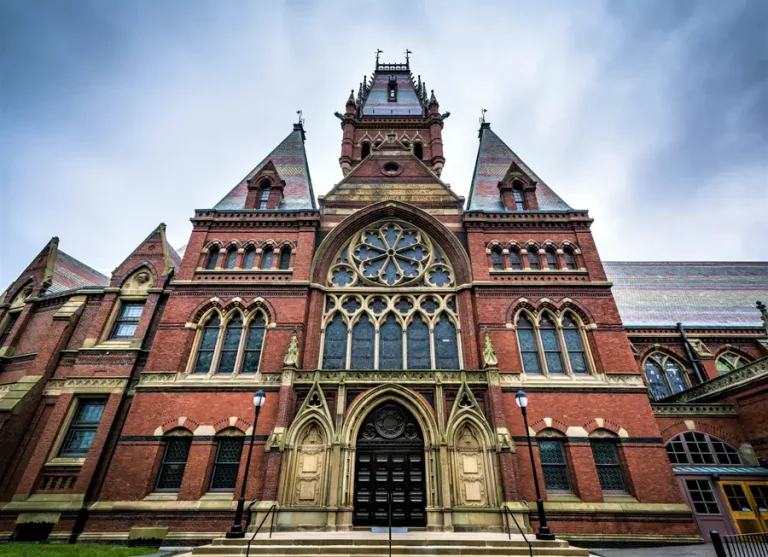
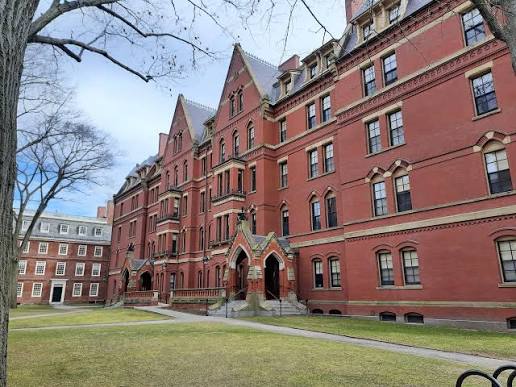
Harvard’s main campus includes historic academic buildings, libraries, classrooms, laboratories, student residences, administrative offices, and open public spaces. Harvard Yard, the university’s historic central area, is especially significant because it represents the institution’s early development and continues to serve as a recognizable center of campus life.
The university’s facilities are spread across several locations in Cambridge, Boston, and the surrounding area. Harvard Business School is located in the Allston neighborhood of Boston, while Harvard Medical School is situated in Boston’s Longwood Medical Area.
This distributed campus structure allows the university to maintain specialized facilities for different disciplines. Students studying medicine have access to a major medical and research environment, while students in business, engineering, public policy, and the sciences benefit from facilities designed for their particular academic needs.
The surrounding region also contributes to Harvard’s educational environment. Boston and Cambridge contain numerous universities, hospitals, museums, research centers, technology companies, and cultural institutions. These organizations create opportunities for internships, collaborative research, professional networking, and public engagement.
Harvard’s location therefore offers more than an attractive campus. It places students in a region where education and innovation play central roles in economic and cultural life.
3. Academic Structure and Schools
Harvard University has a broad academic structure that includes undergraduate education, graduate study, professional training, and interdisciplinary research. Its academic community brings together students and scholars working in the humanities, social sciences, natural sciences, engineering, medicine, law, business, education, and public policy.
The university includes Harvard College, 12 graduate and professional schools, and the Radcliffe Institute for Advanced Study.
Harvard University
+1
The following are some of its major schools and academic divisions.
Harvard College
Harvard College is the undergraduate division of the university. It offers a liberal arts and sciences education that encourages students to explore different subjects before and during their specialized studies.
Students can pursue fields such as economics, government, history, biology, mathematics, computer science, psychology, literature, and environmental science. The curriculum emphasizes analytical reasoning, effective communication, intellectual curiosity, and independent thought.
Students are encouraged to participate in research, community service, student organizations, internships, and international learning opportunities. The goal is not simply to prepare graduates for employment but also to help them develop the knowledge and judgment needed to contribute meaningfully to society.
Harvard Business School
Harvard Business School, founded in 1908, is one of the university’s best-known professional schools. It is particularly recognized for its Master of Business Administration (MBA) program and its influence on management education.
The school is famous for its case method of teaching, in which students analyze realistic business situations, evaluate competing strategies, and discuss decisions with their classmates. This approach develops decision-making, leadership, communication, and problem-solving skills.
Its academic subjects include finance, marketing, entrepreneurship, strategy, organizational behavior, operations, and business leadership. The school also offers executive education and other learning opportunities for experienced professionals.
Harvard Business School has influenced business education around the world by helping establish methods for teaching management through practical cases, collaborative discussion, and the examination of complex organizational problems.
Harvard Law School
Harvard Law School is one of the most influential legal education institutions in the United States. Established in 1817, it prepares students for careers in legal practice, public service, academia, business, government, and international organizations.
Its areas of study include constitutional law, criminal law, international law, human rights, corporate law, environmental law, intellectual property, and legal theory.
Students participate in classroom discussions, legal research, clinical programs, journals, and practical experiences. These activities help them understand both the theoretical foundations of law and the practical responsibilities of legal professionals.
The school has educated numerous judges, government officials, legal scholars, advocates, and leaders in public institutions.
Harvard Medical School
Harvard Medical School, founded in 1782, is a major center for medical education, biomedical research, and clinical innovation.
Its work connects scientific discovery with the prevention, diagnosis, and treatment of disease. Students and researchers explore areas such as genetics, neuroscience, immunology, cancer biology, infectious diseases, pharmacology, and human physiology.
The medical school collaborates with hospitals and research institutions throughout the Boston area. These relationships help connect laboratory discoveries with clinical care and medical training.
Harvard Medical School also contributes to global health research, medical ethics, public health initiatives, and the development of new approaches to healthcare.
Harvard Kennedy School
Harvard Kennedy School focuses on public policy, public administration, government, and leadership. It prepares students to address difficult problems affecting communities, nations, and international society.
Its teaching and research cover subjects such as economic development, political institutions, international relations, public finance, climate policy, negotiation, and social welfare.
The school attracts students and professionals interested in public service, government leadership, nonprofit organizations, and international development. Through case studies, policy research, and practical projects, students learn how public decisions are made and how policies affect people’s lives.
Harvard Graduate School of Education
The Harvard Graduate School of Education focuses on improving education through research, teaching, and the development of educational policy.
Its work examines how people learn, how schools can become more effective, how educational inequalities can be reduced, and how technology influences teaching and learning.
Graduates pursue careers in educational leadership, teaching-related research, policy development, nonprofit organizations, and educational innovation. The school contributes to discussions about improving education systems in the United States and internationally.
Harvard School of Engineering and Applied Sciences
The Harvard John A. Paulson School of Engineering and Applied Sciences combines scientific foundations with practical problem-solving.
Students and researchers work in areas such as computer science, applied mathematics, electrical engineering, mechanical engineering, robotics, materials science, and bioengineering.
The school promotes interdisciplinary collaboration, bringing engineering together with biology, medicine, environmental science, and other fields. Research may involve developing advanced materials, improving computing systems, designing medical technologies, or exploring sustainable energy solutions.
Its mission reflects the increasing importance of engineering and technology in addressing complex social and environmental challenges.
Other important academic institutions
Harvard also includes several other important schools and research divisions:
- Harvard Graduate School of Design: Focuses on architecture, landscape architecture, urban planning, and design.
- Harvard Divinity School: Studies religion, theology, ethics, and religious traditions.
- Harvard T.H. Chan School of Public Health: Investigates population health, disease prevention, epidemiology, and health policy.
- Harvard School of Dental Medicine: Focuses on oral health, dental education, and related research.
- Harvard Kenneth C. Griffin Graduate School of Arts and Sciences: Supports advanced study and research across many academic disciplines.
- Harvard Extension School: Offers educational opportunities for lifelong learners and people seeking to continue their studies.
- Radcliffe Institute for Advanced Study: Supports interdisciplinary scholarship, research, and intellectual exchange.
Together, these institutions allow Harvard to address questions that require knowledge from multiple disciplines, from the molecular basis of disease to the economic and political causes of global inequality.
Harvard University
+2
4. Academic Excellence and Teaching Methods
One of the defining features of Harvard University is its emphasis on rigorous academic work. Students are expected to read extensively, evaluate evidence, question assumptions, communicate clearly, and develop independent arguments.
Harvard’s educational approach differs across schools and subjects, but several common principles shape the learning experience.
Critical thinking
Students are encouraged to move beyond memorizing facts. They must understand why an argument is convincing, identify weaknesses in evidence, compare different explanations, and develop their own conclusions.
For example, a student studying economics may investigate how government policies affect employment and inflation. A student studying history may compare historical documents to understand how a political movement developed. A biology student may evaluate experimental findings to determine whether a scientific hypothesis is supported.
These approaches help students develop transferable intellectual skills.
Discussion-based learning
Classroom discussions play an important role in many Harvard programs. Students may be asked to defend a position, respond to criticism, or explain how they arrived at a conclusion.
The case method at Harvard Business School is a prominent example. Rather than simply listening to lectures about management, students analyze business decisions and debate possible solutions.
Discussion-based learning also encourages students to consider perspectives different from their own. In a university community that includes people from many backgrounds, this exchange can deepen understanding of complex issues.
Research and independent study
Harvard provides opportunities for students to participate in research under the guidance of faculty members and other scholars. Depending on their programs, students may work in laboratories, archives, libraries, field research projects, or policy research centers.
Undergraduate students can explore academic questions beyond their regular coursework, while graduate students often conduct advanced research that contributes directly to their disciplines.
This emphasis on investigation helps connect education with discovery. Students learn not only what is already known but also how knowledge is created, tested, challenged, and improved.
Interdisciplinary education
Many of today’s most difficult problems cannot be solved by a single academic discipline. Climate change, public health emergencies, artificial intelligence, poverty, and international conflict all require several kinds of expertise.
Harvard’s wide range of schools and research centers makes interdisciplinary collaboration possible. A public health researcher may work with an economist, a computer scientist may collaborate with a medical team, and a legal scholar may study the regulation of emerging technologies.
This approach reflects the university’s belief that intellectual progress often occurs when different fields exchange ideas and methods.
5. Admission to Harvard University
Admission to Harvard is highly competitive, especially for undergraduate study. Applicants come from across the United States and many other countries, and the number of qualified candidates is much greater than the number of available places.
However, admission is not determined by academic grades alone. Harvard considers applicants’ academic preparation, personal experiences, individual achievements, interests, and potential contributions to the university community.
Academic preparation
Strong academic performance is important. Applicants should demonstrate that they have challenged themselves through the educational opportunities available at their schools.
Relevant evidence can include excellent grades, demanding courses, strong writing skills, and a genuine interest in learning. There is no single set of grades that guarantees admission.
Standardized testing
Testing requirements can change over time, so applicants should consult Harvard College’s official admissions website for the rules that apply to their intended entry year.
Applicants should also distinguish undergraduate admissions requirements from those of graduate and professional schools. Different programs may use different testing policies, application systems, and selection criteria.
Extracurricular activities
Activities outside the classroom can help demonstrate initiative, responsibility, creativity, and commitment.
Examples include:
- Participating in community service or social initiatives.
- Conducting independent research or developing a useful project.
- Competing in academic, artistic, or athletic activities.
- Starting a club, organization, or small business.
- Contributing to family responsibilities or community life.
- Developing a significant skill through sustained practice.
The purpose is not to accumulate the largest possible number of activities. Meaningful engagement, personal growth, and the ability to explain what an experience taught the applicant can be more important than an impressive-looking list.
Essays and recommendations
Undergraduate applicants generally submit written materials that help the admissions committee understand their character, experiences, motivations, and goals.
A thoughtful essay should be authentic and specific. It can describe an important experience, an intellectual interest, a challenge, or a moment that changed the applicant’s understanding of the world.
Recommendations from teachers and other appropriate sources can provide additional context about a student’s academic habits, curiosity, reliability, and contribution to the community.
International applicants
Harvard welcomes applications from students around the world. International applicants are evaluated through the university’s admissions process and should follow the same official instructions regarding documentation, deadlines, testing, and financial aid.
Applicants from India and other countries should understand that excellent marks in national or international examinations do not guarantee admission. Harvard evaluates applicants within a broader context that includes their achievements, educational opportunities, personal qualities, and potential.
For prospective undergraduate students, the most reliable starting point is the official Harvard College Admissions website . Graduate applicants should consult the individual school’s admissions page.
Harvard College
+1
6. Tuition Fees, Scholarships, and Financial Aid
A Harvard education can be expensive when tuition, accommodation, meals, insurance, books, and other expenses are considered. Nevertheless, the university has an extensive need-based financial aid program intended to make undergraduate education accessible to students from different economic backgrounds.
It is important to distinguish the published cost of attendance from the amount an individual student is expected to pay. The actual family contribution can vary significantly according to financial circumstances.
Need-based financial aid
Harvard College states that financial need does not affect an applicant’s chances of admission. Its undergraduate financial aid program is based on demonstrated financial need rather than academic merit scholarships.
The university determines eligibility using financial information supplied by the student and family. Assistance may cover tuition and other educational expenses, depending on the family’s circumstances and the applicable aid policy.
For the 2025–2026 academic year, Harvard announced that families with typical assets and annual incomes below $100,000 would generally have no expected contribution toward the cost of attendance. Families with incomes below $200,000 would generally receive aid covering at least tuition, with additional support depending on their circumstances. These thresholds and conditions should be checked against the current policy before applying.
Harvard
+2
Financial assistance for international students
Harvard College makes its need-based financial aid available to international students under the same financial aid principles that apply to American students.
This is particularly important for students from countries where the full cost of studying in the United States may be far beyond the financial resources of most families.
International applicants should investigate financial aid early, prepare the required financial documents, and follow the instructions for their application cycle.
Understanding the total cost
Students should consider more than tuition alone. Living expenses, travel, personal needs, health insurance, books, and other fees may contribute to the total cost of attendance.
Students considering graduate study should be especially careful because financial aid differs by school and degree program. Funding arrangements may include fellowships, research assistantships, teaching positions, scholarships, or loans, depending on the course and the student’s eligibility.
The central lesson is that prospective students should not assume either that Harvard is automatically unaffordable or that every admitted student receives the same financial package. They should use the university’s official financial aid information to estimate their own costs.
7. Student Life at Harvard University
Student life at Harvard extends well beyond academic classes. Students participate in clubs, sports, cultural activities, volunteer programs, artistic performances, research groups, and social events.
The university brings together individuals with different nationalities, languages, interests, beliefs, and life experiences. This diversity allows students to learn from one another while developing friendships and professional relationships that may last throughout their lives.
Residential life
Many undergraduate students live in university residential accommodation. Harvard’s residential system is an important part of the undergraduate experience because it creates smaller communities within a large university.
Students share common spaces, participate in social events, form study groups, and build relationships with classmates outside the classroom. Residential communities can also provide opportunities for mentoring, intellectual discussions, and extracurricular activities.
Living on campus allows students to experience university life more fully, although accommodation arrangements and requirements vary according to the program.
Student organizations and clubs
Harvard has numerous student organizations covering academic, cultural, political, artistic, recreational, and professional interests.
Students may join debate societies, entrepreneurship groups, literary organizations, music ensembles, cultural associations, volunteer organizations, and subject-specific clubs.
These organizations help students develop practical skills such as teamwork, leadership, event planning, communication, and project management.
For international students, cultural organizations can also provide a sense of community and opportunities to share traditions from their home countries.
Sports and athletics
Athletics have a long history at Harvard. The university’s teams are known as the Harvard Crimson, and its athletic programs include sports such as rowing, basketball, football, swimming, fencing, and track and field.
The Harvard–Yale rivalry is one of the best-known traditions in American college sports. The annual football game between the two universities, commonly called The Game, brings together students, alumni, and supporters.
Sports can promote discipline, cooperation, physical fitness, and a sense of belonging. Students who are not varsity athletes may also have opportunities to participate in recreational sports and fitness activities.
Arts, culture, and creativity
Harvard’s cultural environment includes music, theater, dance, literature, visual arts, film, and museums.
Students can participate in performances, attend exhibitions, explore historical collections, and engage with artists and scholars. These opportunities enrich the university’s academic atmosphere by encouraging creative expression alongside scientific and professional study.
Overall, student life at Harvard is shaped by the interaction of intellectual ambition, social participation, cultural diversity, and personal development.
8. Harvard’s Libraries, Museums, and Research Facilities
Libraries and research facilities are essential to Harvard’s academic mission. The university maintains a large library system containing books, manuscripts, scholarly journals, archival collections, digital resources, and specialized research materials.
Harvard’s library system is one of its most valuable intellectual resources. Its collections support undergraduate assignments, advanced scholarship, historical investigation, and research across a wide range of disciplines.
Harvard Library
Harvard Library serves students, faculty members, researchers, and scholars. Its collections include rare books, historical documents, scientific publications, maps, photographs, manuscripts, and digital materials.
Researchers studying history may consult original documents, while scientists may use specialized databases and academic journals. Students working on literature, economics, philosophy, or international relations can draw on extensive resources to develop their understanding of complex topics.
Digital collections also make many materials accessible beyond physical library buildings, supporting research and learning across geographical boundaries.
Harvard’s museums
Harvard’s museums preserve and interpret collections related to art, natural history, archaeology, anthropology, science, and culture.
These collections have educational value because they allow students and visitors to examine objects, specimens, artworks, and historical materials directly.
Museums also support research and public education. They can help visitors understand subjects such as human evolution, biodiversity, ancient civilizations, artistic traditions, and the history of scientific discovery.
Research laboratories and institutes
Harvard operates research facilities across many academic disciplines. Scientists investigate fundamental questions about the natural world, while engineers develop technologies and medical researchers work to understand and treat disease.
Research institutes also explore issues such as public policy, economic development, climate change, education, ethics, and international affairs.
This research infrastructure helps connect theoretical knowledge with practical applications. Discoveries made in laboratories or research centers may eventually influence medical treatments, technological products, public policies, and educational practices.
The university’s combination of libraries, museums, laboratories, and specialized institutes makes it an important center for the creation and preservation of knowledge.
Harvard University
+1
9. Scientific Research and Innovation
Harvard has made substantial contributions to scientific and technological research. Its researchers work to expand understanding of the universe, improve human health, develop new technologies, and address environmental challenges.
The university’s research culture emphasizes careful investigation, collaboration, evidence-based reasoning, and the communication of findings.
Medical and biomedical research
Medical research at Harvard encompasses many areas, including cancer, genetics, neuroscience, infectious diseases, immunology, and regenerative medicine.
Researchers seek to understand the biological processes underlying illnesses and to identify more effective approaches to prevention, diagnosis, and treatment.
The university’s relationships with medical institutions in the Boston area create opportunities for collaboration among laboratory scientists, physicians, and clinical researchers.
Biomedical research can take many years to produce practical treatments, and promising early findings do not always lead to successful therapies. Nevertheless, systematic investigation is essential for improving healthcare over time.
Artificial intelligence and computer science
Artificial intelligence and computer science have become increasingly important areas of research across Harvard’s academic community.
Researchers investigate machine learning, algorithms, data analysis, robotics, computational biology, cybersecurity, and the ethical implications of emerging technologies.
Artificial intelligence may support scientific discovery, improve the analysis of medical information, and help solve complex computational problems. At the same time, it raises questions about privacy, fairness, reliability, employment, and accountability.
Harvard’s interdisciplinary environment provides opportunities to examine both the technical capabilities of these systems and their wider effects on society.
Climate change and environmental research
Environmental challenges require cooperation among scientists, economists, engineers, policymakers, and communities.
Harvard researchers study climate systems, energy technologies, biodiversity, environmental health, sustainable development, and the economic consequences of environmental change.
Such research can inform public policies and technological strategies intended to reduce pollution, improve energy efficiency, and protect ecosystems.
Economics and social sciences
Harvard also has a major research presence in economics, sociology, political science, psychology, anthropology, and related fields.
Researchers investigate questions such as why poverty persists, how institutions affect economic growth, how political systems function, and how social environments influence human behavior.
The results of these studies can contribute to public debate and policy development, although research findings must be interpreted carefully and may be subject to legitimate scholarly disagreement.
The broader significance of Harvard’s research lies in its effort to combine intellectual discovery with the possibility of practical benefit.
10. Famous Alumni of Harvard University
Harvard has educated many individuals who later became influential in politics, business, science, literature, technology, and public service. Alumni achievements have contributed significantly to the university’s international reputation.
However, it is important to remember that the success of an individual depends on many factors, including personal effort, opportunities, collaboration, and circumstances. Attending a prestigious university alone does not guarantee achievement.
Some well-known Harvard alumni include the following.
Barack Obama
Barack Obama, the 44th president of the United States, graduated from Harvard Law School in 1991. Before entering national politics, he worked as a community organizer, taught law, and served in public office.
His career illustrates the connection between legal education, political leadership, and public service.
John F. Kennedy
John F. Kennedy, the 35th president of the United States, graduated from Harvard College in 1940. He later became a major figure in American politics during the Cold War.
His presidency is associated with significant developments in international relations, the space program, civil rights debates, and American political history.
Franklin D. Roosevelt
Franklin D. Roosevelt, the 32nd president of the United States, attended Harvard College and graduated in 1903. He led the country during the Great Depression and most of World War II.
His administration introduced major economic and social programs under the New Deal and played a central role in shaping the modern American federal government.
Bill Gates
Bill Gates attended Harvard College before leaving in 1975 to pursue the development of Microsoft with Paul Allen.
Microsoft later became one of the world’s most influential technology companies. Gates also became widely known for his philanthropic work, particularly in global health, education, and development.
His career is often discussed in relation to entrepreneurship, technological innovation, and the role of philanthropy in addressing global challenges.
Mark Zuckerberg
Mark Zuckerberg attended Harvard College and developed the early version of Facebook while he was a student. Facebook subsequently grew into a major social networking platform, and its parent company became known as Meta.
His career illustrates how university environments can sometimes provide opportunities for experimentation, collaboration, and entrepreneurship. It also highlights wider debates about digital privacy, social media, and the influence of technology companies.
W. E. B. Du Bois
W. E. B. Du Bois was a pioneering sociologist, historian, writer, and civil rights activist. He earned a PhD from Harvard University in 1895 and became one of the most influential intellectuals in the history of African American scholarship.
His work examined racism, inequality, education, history, and the social conditions affecting Black communities. He helped establish important foundations for modern sociology and civil rights activism.
Helen Keller
Helen Keller attended Radcliffe College, which was historically associated with Harvard and became integrated into the university. She graduated in 1904.
Keller became an internationally recognized author, lecturer, and advocate for people with disabilities. Her life and work contributed to public understanding of disability, education, and social inclusion.
These individuals represent only a small portion of Harvard’s extensive alumni community. Many other graduates have made important contributions as scientists, educators, judges, artists, physicians, entrepreneurs, and community leaders.
11. Harvard’s Influence on Politics and Government
Harvard has played an important role in American political life. Its alumni have served as presidents, legislators, judges, diplomats, policy advisers, and public administrators.
The university’s schools and research centers also contribute to political and policy discussions through scholarship, public lectures, research reports, and professional education.
Harvard Kennedy School, in particular, trains students interested in government, international development, public administration, and policy leadership.
Its research addresses topics such as democratic institutions, economic inequality, national security, public health, environmental policy, and international cooperation.
Harvard Law School has also influenced legal scholarship and public institutions through the work of its graduates and faculty.
Nevertheless, Harvard is not a political institution with a single unified viewpoint. Its academic community includes people with differing political perspectives, and many important issues generate debate within the university.
Its broader contribution is to provide a setting in which ideas about government, law, economics, and society can be examined, challenged, and developed.
12. Harvard’s Global Influence
Harvard’s influence extends well beyond the United States. Students, faculty members, researchers, and alumni participate in international networks that connect universities, governments, businesses, nonprofit organizations, and scientific institutions.
The university’s global reach is visible in several areas.
International education
Students from different countries come to Harvard to study subjects ranging from medicine and engineering to economics, law, and public policy.
Their experiences expose them to different educational traditions, social conditions, and approaches to solving problems.
International students may later apply what they learn to their home countries, whether through public service, scientific research, entrepreneurship, education, or healthcare.
Global health
Harvard-affiliated researchers and institutions study health problems affecting populations around the world.
Research topics include infectious diseases, maternal and child health, nutrition, healthcare delivery, environmental health, and health inequalities.
Scientific collaboration across countries is essential because many health challenges cross national boundaries and require shared evidence, resources, and expertise.
International development
Harvard researchers and graduates contribute to discussions about poverty reduction, economic growth, education, governance, and institutional development.
Such work examines why some development policies succeed while others produce limited results. It also explores how governments, communities, and international organizations can improve living conditions.
The effectiveness of development strategies depends on local circumstances, so approaches that work in one country may not automatically succeed in another.
Knowledge sharing
Through academic publications, online courses, public lectures, research collaborations, and digital learning resources, Harvard contributes to the international exchange of knowledge.
Harvard Online provides learning opportunities for people who may not be enrolled in a degree program or physically present on campus.
These resources can help expand access to education, although online learning does not necessarily provide the same experience or credentials as admission to a full university degree program.
13. Harvard University and Students from India
Harvard attracts interest from Indian students because of its academic reputation, international community, research opportunities, and financial aid programs.
Indian students may apply to Harvard College for undergraduate study or to one of its graduate and professional schools for advanced education.
The application process depends on the intended program, and applicants should not assume that the requirements for undergraduate admission are identical to those for a master’s degree, doctorate, MBA, or medical degree.
Undergraduate opportunities
Indian students applying to Harvard College should demonstrate strong academic preparation and meaningful engagement with their interests.
Academic achievements are important, but applicants can also explain their experiences in science, mathematics, literature, entrepreneurship, public service, arts, sports, or other areas.
Students should focus on presenting an accurate picture of their abilities and experiences rather than trying to construct an application based entirely on activities they believe admissions officers want to see.
Graduate education
Harvard’s graduate schools offer specialized opportunities for students who wish to develop expertise in particular fields.
Depending on the student’s goals, these may include business, law, engineering, public health, education, design, government, and academic research.
Applicants should investigate each program separately because academic prerequisites, work experience, examinations, language requirements, and funding arrangements can differ considerably.
Financial planning for Indian families
The cost of studying in the United States can be a major concern for Indian families. Exchange rates, travel expenses, living costs, and differences between Indian and American education systems can make financial planning especially important.
Harvard College’s need-based financial aid is available to eligible international students under the same general financial aid principles as for American students.
However, undergraduate financial aid policies should not be assumed to apply identically to every graduate program. Applicants should verify the funding options available through their specific school.
Preparing for an application
Indian students interested in Harvard can take several practical steps:
- Develop strong subject knowledge and academic skills.
- Read widely and pursue intellectual interests beyond examinations.
- Participate meaningfully in projects, research, community service, or other activities.
- Strengthen academic writing and communication skills.
- Research the requirements and deadlines for the exact program.
- Prepare financial documents and investigate relevant funding options.
- Use official university websites rather than relying entirely on social media advice or commercial admission consultants.
The most important principle is to build a strong educational foundation and pursue meaningful goals, regardless of whether admission to Harvard ultimately becomes possible.
14. Challenges and Criticisms of Harvard University
Despite its achievements, Harvard faces significant challenges. Its history, wealth, influence, and position in society have generated debates about fairness, access, institutional responsibility, and the purpose of higher education.
A balanced understanding of Harvard requires examining both its strengths and the questions raised by its critics.
Highly competitive admissions
Harvard receives applications from many talented students but can admit only a limited number.
This creates intense competition and may lead students to believe that admission to a particular university is the only path to success. In reality, many universities offer excellent education, and individual achievement depends on a broad range of factors.
The pressure surrounding elite admissions can also encourage excessive focus on grades, awards, and extracurricular achievements.
Economic inequality
The cost of attending a highly selective private university can appear prohibitive to families with limited financial resources.
Harvard’s need-based aid program attempts to address this challenge for undergraduates, but financial accessibility also depends on awareness of the program, the application process, and individual circumstances.
More broadly, critics of elite higher education argue that prestigious institutions may reinforce existing social advantages if access to educational opportunities is uneven long before students apply.
Historical responsibility
Harvard’s history includes connections to slavery, discrimination, and the exclusion of certain groups from educational opportunities.
The university has investigated aspects of its historical relationship with slavery and publicly acknowledged the importance of understanding these legacies. Its historical record also includes important milestones in the expansion of educational opportunities for women, African Americans, Native Americans, and other groups.
Harvard University
+1
Examining this history is important because universities are not separate from the societies in which they develop. Their institutions, financial resources, and traditions can reflect wider patterns of power and inequality.
Academic freedom and campus debate
Universities must balance open debate, freedom of expression, academic independence, and the safety and dignity of their communities.
Harvard, like other major universities, has faced debates about how institutions should respond to controversial speakers, political disagreements, discrimination, protests, and international conflicts.
These questions rarely have simple solutions. They require careful consideration of institutional principles, legal responsibilities, and the rights of students and faculty members.
Maintaining public trust
Because Harvard has substantial financial resources and international influence, its decisions often receive close public attention.
Questions about governance, research ethics, institutional leadership, donor influence, and financial priorities can affect how people view the university.
Maintaining public trust requires transparent decision-making, responsible management, academic integrity, and a willingness to examine criticism.
These challenges do not erase Harvard’s achievements, but they demonstrate that a prestigious university must continually evaluate its responsibilities to students, scholars, and society.
15. The Importance of Harvard’s Endowment
Harvard is known for its large endowment, which consists of financial assets invested to support the university’s long-term mission.
An endowment is not simply a bank account containing money that can be spent freely. Much of its funding is associated with donor restrictions or designated purposes, and its management must consider future generations of students and researchers.
Endowment income can support scholarships, faculty positions, research activities, libraries, academic programs, and other university operations.
This financial structure allows Harvard to support activities that may not generate enough direct revenue to sustain themselves, including certain areas of fundamental research and educational access.
At the same time, endowment management raises questions about investment choices, institutional priorities, financial risk, and the balance between present needs and future obligations.
Harvard must manage these resources carefully because the university’s educational mission extends across generations. Its financial strength is valuable not simply because it makes the institution wealthy but because it can support teaching, research, and public service over a long period.
16. Harvard’s Role in Entrepreneurship and Business Innovation
Harvard has contributed to entrepreneurship by educating business leaders, supporting research, and providing an environment where students can explore new ideas.
Entrepreneurship at the university extends beyond business school. Students and researchers from engineering, computer science, medicine, economics, and other disciplines may develop products, technologies, or services intended to address practical problems.
For example, a biomedical researcher may help develop a new diagnostic technology, while a computer scientist may investigate a software application that improves access to information.
The university environment can support these efforts through mentorship, research collaborations, entrepreneurship programs, professional networks, and access to specialized expertise.
However, successful innovation requires more than an idea. Entrepreneurs must understand customer needs, financial management, competition, regulation, product development, and ethical responsibilities.
Harvard’s contribution to entrepreneurship is therefore broader than producing well-known business founders. It includes helping people understand how organizations work, how ideas can be evaluated, and how research can sometimes be transformed into useful products and services.
17. Harvard University in the Digital Age
Technology is changing how universities teach, conduct research, and communicate with the public. Harvard has opportunities to use digital tools to expand educational access and improve academic collaboration.
Online courses, digital libraries, remote lectures, virtual research meetings, and educational software allow people to engage with academic material beyond the physical campus.
Online learning
Harvard Online provides courses and educational resources covering various subjects. Depending on the offering, learners may study topics such as computer science, data analysis, leadership, health, business, and the humanities.
Online learning can be especially useful for people who cannot relocate to the United States or commit to a full-time degree program.
However, prospective learners should carefully check the type of course offered, the time commitment, the fees, and whether a certificate or formal academic credit is available.
Artificial intelligence in education
Artificial intelligence may help students organize information, explore difficult concepts, practice skills, and receive feedback. It may also support researchers who need to analyze large datasets or identify patterns in complex information.
Nevertheless, AI systems can produce inaccurate information, reproduce biases, or obscure the reasoning behind their answers.
Universities must therefore consider how to use such systems responsibly while preserving academic integrity, independent thinking, privacy, and meaningful human interaction.
The future of higher education
In the coming years, universities will likely continue to experiment with new methods of teaching, research, assessment, and collaboration.
Harvard’s challenge will be to adopt useful innovations while preserving the qualities that make higher education valuable: rigorous inquiry, thoughtful discussion, reliable evidence, creativity, and the development of independent judgment.
Technology can expand access to knowledge, but it cannot automatically replace the mentorship, collaboration, and sustained intellectual engagement that are central to a strong educational experience.
18. Why Harvard University Is Considered Prestigious
Harvard’s reputation is the result of several factors rather than a single achievement.
First, its history gives it an unusually long record of institutional development. Having been founded in 1636, it has participated in nearly four centuries of changes in American education and public life.
Second, its academic structure brings together a wide range of disciplines, allowing students and researchers to study subjects from literature and philosophy to engineering and medicine.
Third, its faculty and research programs contribute to the development of knowledge across many fields. Scientific discoveries, scholarly publications, legal research, and policy studies help maintain its academic influence.
Fourth, its extensive libraries, research facilities, financial resources, and professional networks provide opportunities for advanced learning and collaboration.
Fifth, its alumni have held influential positions in government, science, business, education, and public service. Their achievements have strengthened Harvard’s visibility around the world.
Finally, the university has an international reputation that attracts talented students and scholars. This creates a cycle in which academic resources, professional networks, and intellectual ambition reinforce one another.
Nevertheless, prestige should not be confused with universal superiority. The best university for an individual depends on academic interests, teaching style, cost, location, available support, and personal goals. Many institutions around the world provide excellent education and produce important research.
Harvard’s significance lies in the combination of its historical legacy, academic breadth, research capacity, and continuing influence—not in the idea that it is the only place where exceptional learning can occur.
19. The Future of Harvard University
Harvard’s future will depend on how effectively it responds to changes in science, technology, society, and higher education.
One important priority is maintaining academic excellence while expanding access to educational opportunities. Financial aid, inclusive academic environments, and support for students from different backgrounds will remain important considerations.
Another priority is advancing research that addresses global challenges. Climate change, emerging infectious diseases, artificial intelligence, economic inequality, and international conflict require careful investigation and collaboration across disciplines.
The university will also need to adapt to technological developments. Digital education and AI-assisted research may create new possibilities, but they will require responsible policies and thoughtful evaluation.
Public trust will be another essential factor. Institutions with significant influence must demonstrate academic integrity, responsible governance, transparency, and a commitment to learning from past mistakes.
Finally, Harvard’s future will depend on the quality of its intellectual community. Buildings, financial resources, and historical traditions matter, but a university’s deepest value comes from the people who teach, study, conduct research, challenge assumptions, and contribute to society.
If Harvard can preserve its strengths while addressing its limitations, it will remain an important participant in the global pursuit of knowledge.
Conclusion
Harvard University is one of the most historically significant and internationally recognized universities in the world. Founded in 1636, it has developed from a small colonial college into a major institution for education, scientific research, professional training, and public scholarship.
Its academic schools cover a broad range of disciplines, including arts and sciences, business, law, medicine, engineering, education, design, and public policy. Its libraries, museums, research facilities, and international academic networks provide resources for students and scholars seeking to understand and improve the world.
Harvard’s influence can be seen in the achievements of its alumni, the work of its researchers, and its participation in important discussions about government, healthcare, technology, economics, and social development. Its financial aid programs also demonstrate an effort to make undergraduate education accessible to students with different economic circumstances.
At the same time, Harvard faces challenges involving competitive admissions, economic inequality, historical responsibility, institutional governance, and the changing expectations of society. Its reputation does not make it free from criticism, nor does attendance at Harvard guarantee personal or professional success.
Ultimately, Harvard University is significant because it brings together knowledge, research, teaching, and intellectual debate on a large scale. Its enduring mission is to develop understanding, educate future generations, and contribute to society through scholarship and discovery.
For students around the world, Harvard can serve as an example of academic ambition and the possibilities of higher education. Yet the deeper lesson of its history is that meaningful learning is not limited to one university. Curiosity, persistence, critical thinking, and a commitment to improving the lives of others can flourish wherever people have the opportunity to pursue knowledge seriously.
Official resources for further information
- Harvard University — Official website
- History of Harvard University
- Academic schools and programs
- Harvard College admissions
- Harvard College financial aid
These sources provide further information about Harvard’s history, academic programs, admissions requirements, and financial aid policies.
For a related topic, you can explore Harvard University admission requirements for Indian students or Harvard University vs. Oxford University.